

When summer's harvest feels like so much work…
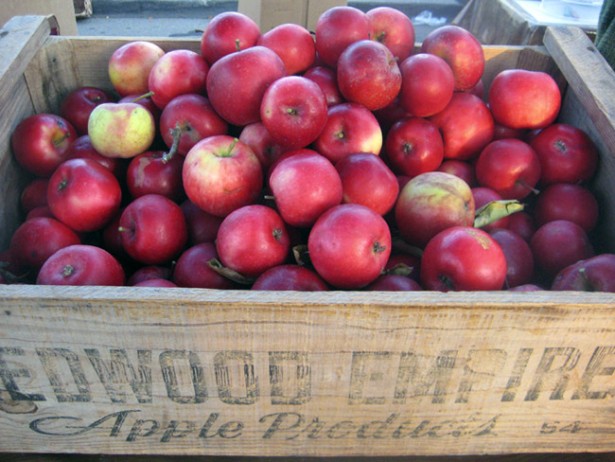
I stared down at the 50-lb. box of apples I had picked from the tree in our yard.
Maybe I could just give them away?
No, I needed to do something with them. Core, slice, freeze in ziplock bags, ready for applesauce all winter. I knew what needed to be done, but it was 90-degrees outside and I’d already run 7 miles and cleaned the house and spent hours preparing for a BBQ the next day.
Then I opened the fridge: Beets from the garden needing to the roasted, beans needing to be washed and eaten, lettuce needed to be washed (over and over and over). There were still more apples on the tree waiting to be picked and dealt with. I closed my eyes.
Harvest actually takes a lot of work.
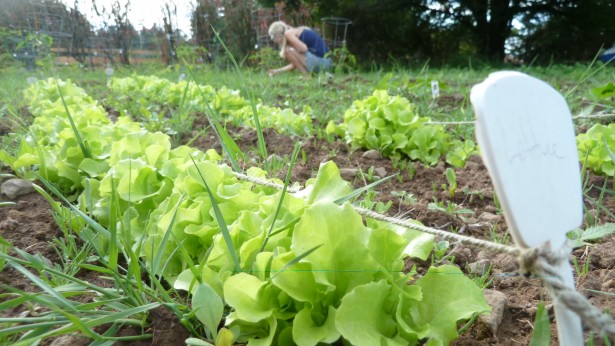
It had struck me (God?) while running. You’re part of the harvest. How interesting that while working hard on the season of food-harvest we were also working hard on this church-plant; which hopefully will be, Lord willing, a harvest of souls. The little things like praying, forming 34 hamburgers, making Costco runs for food, cleaning, organizing toys, setting up tables. All those little jobs are part of the harvest. Just like the little stuff of washing, slicing and coring apples — it’s all harvest stuff.
What is harvest anyway?
Physically, we don’t “make” the harvest. We don’t control it, or determine when it will come. It’s not up to us. We simply work, water, weed, watch, and wait. We work the ground and plant seeds, we water faithfully little by little, over time, we weed whenever we see something harmful spring up (or in the case of our garden, our friends weed it…which is convenient!), and then we watch and wait. It is up to God, not us, when He chooses to bring fruit. But when He does, it is our job to harvest. And for all of us non-farmers out there, just in case we didn’t know — harvesting it actually a lot of work.
But. It’s worth it.
When, come November, you open that freezer and take out a snack of frozen blueberries. When your kids sit over bowls of steaming applesauce, freshly made from frozen apples. When you pull a hot blackberry cobbler from the oven. When you watch your kids chomp on fresh green beans from the garden. The joy, the warmth, the nourishment, the strength.
The fruit. Their little bodies grow all because you took the time and energy to harvest.
I’m freshly reminded that spiritual harvesting is worth it too. As we recently celebrated the one-year birthday of RENEW, surrounded by saints eager to see God’s Kingdom come, eager to grow and be challenged, I was overwhelmed by God’s goodness, grace, generosity toward us. And the best part–seeing the fellow harvesters around us. Workers, laborers, normal people who live normal lives and hold normal jobs — but who belong to the un-normal upside down kingdom and are willing to lay down their lives to harvest. To be part of the harvest by washing dishes or grilling burgers, by living below their means and giving their excess away. There’s a million ways to be part of the harvest (and thousands of local church bodies where this harvest takes place) and it’s hard work that’s for sure … but it’s worth it.
So let’s keep harvesting and praying for harvesters. Jesus said this:
Then he said to his disciples, “The harvest is plentiful but the workers are few. Therefore pray earnestly to the Lord of the harvest to send out laborers into his harvest.”
Jesus is saying, “The harvest is now.” This is the season. Now is the time. The apple trees are full of fruit. The green beans are ready. The tomatoes are bright red. Spiritually, people are hurting, hungering, needing.
But there’s no way to harvest without work.
So as we head into September and back into the swing of school, life, routine, instead of asking God for more time to relax, I’m just asking Him for strength to harvest. In the natural and the spiritual. Strength to clean this house and train these kids and run the miles and keep picking apples and blackberries. And strength to spend time with Him and love people and ask Him for ways to show His truth, love, light to the world. Lord, let me harvest. Give me eyes to see where you are working, and the strength to go there and work alongside You. For Your harvest, for Your glory. Amen?
Where are you harvesting this week? Let us know. Praying for strength for you too. Thanks for reading.
Because sometimes you have to run alone…

We sat in her kitchen sipping coffee. She was walking through a trial–a long one–and didn’t have a clear end in sight.
“It’s like we started out, and all these people were at our side. I could see them all around. I could hear them cheering. They all seemed to be on board, running beside us. But as the months have drawn on, I find myself looking around … and can’t see anyone anymore. We’ve made some hard choices to obey what we feel God has called us to do, and for whatever reason, I just can’t see anyone around us anymore. It feels so lonely, and makes me wonder if we’re doing the right thing.”
Have you been there too? I know I have. Although it’s critical that we surround ourselves with like-minded people and learn to run together, it’s equally important that we know how to run alone. Why?
Because we’re bound to spend a lot of time doing just that.
Last year, as we were praying, planning, and preparing for the adventure of RENEW, we met with lots of people who are considering whether or not to join this venture. And even though I prayed every single day that only those who God was calling to join would come, I still found myself–in my flesh–craving a nice-sized crowd around us. Sure, it was partly because I was genuinely excited for what God was doing and wanted as many people as possible to be involved.
But also because things are just so much more comfortable when a bunch of other people are around.
The key thought process is this: If a whole bunch of us are running this direction then it must be God, right?
Right?
But what if we’re called to run alone? Or with only a few? Does that mean we’re going the wrong direction?
Does a crowd = God’s blessing?
Does popularity prove it’s the hand of God?
Oh, friends, these lessons are not easy, and chances are we must learn them again and again (I have this past year!). Even though we are wise to consider the wise counsel of others, We cannot determine God’s will based on popular opinion.
Crowd-sourcing theology will never bring us to the heart of God.
If we only run as far as everyone else is willing to go, we’ll never really see His kingdom come.
So, we must learn to run alone. How?
By remembering that we never actually run alone. No matter who is with us and who is not, If we are walking with Jesus we are never running alone.
And as long as we crave the company of man more than the company of God, we will never go far in our Christian walk. Just this morning in my quiet time I read:
“Nevertheless, I am continually with you; you hold my right hand. You guide me with your counsel, and afterward you will receive me to glory.
Whom have I in heaven but you? And there is none on earth that I desire besides you. My flesh and my heart may fail, but God is the strength of my heart and my portion forever.” Psalm 73:23-26
There is none on earth I desire besides You.
It is awesome when a crowd gathers around. When many are there to cheer us on. It’s such a gift to have people are your right and left, running beside.
But we must be a people who run with God.
HE must be who is at our right hand. Who we desire fellowship with more than anyone or anything else. No matter who comes and goes in our life, who starts with us or ends with us or comes just for a while. We must run with God. Our Source, our Joy, our Strength.
Revisiting this and recommitting again to run … no matter what. How can you run with Him this week? Thanks for reading.
What is your thumb?
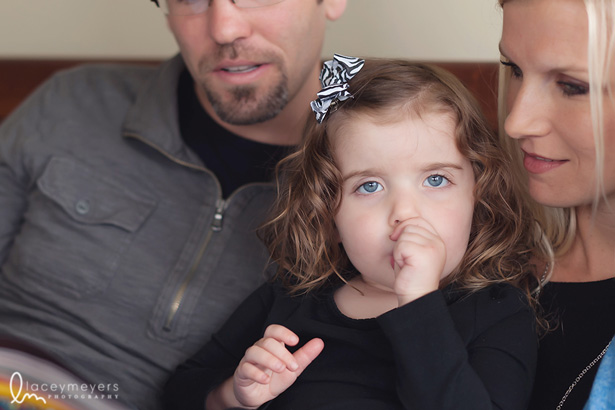
I am happy to report that at 4 1/2 years old, Heidi is officially done with thumb-sucking. Re-reading this convicted me though, and I’ve made some personal changes to break my own thumb sucking habits. You know what? It’s freeing! (More on that later.) Read and ask God to show you what your thumb is, and how to turn to Him instead…
~
The first time she found it, I cheered. When she was two months old I was thrilled she’d learned the age-old self-soothe method that enabled her to fall asleep on her own: Sucking her thumb.
But now she’s 3. Almost 3 1/2. I don’t mind that it goes in when she needs to fall asleep. Fine. But I noticed now it goes in when she’s stressed. Or upset. Or if she needs to be particularly quiet or patient. I know this is a ridiculous exaggeration but sometimes I think she draws on that thumb like a chain smoker on a cigarette.
Unfortunately, sometimes I recognize that same behavior in myself. The other day I finished a stressful situation, walked into the kitchen, and opened the fridge. Then I stopped and thought: Why? It wasn’t mealtime and I wasn’t hungry.
I was sucking my thumb.
There’s nothing wrong with a toddler sucking her thumb. In fact, as an infant it’s a helpful behavior. But there’s a time when the toddler must grow up, right?
Right.
And whether it’s a thumb, a chocolate bar, or a cigarette — all can be self-soothe methods we might need to outgrow. So the first question to ask our Loving Father is,
“What is my thumb?”
Because maturity is learning to quit sucking our thumbs and start depending on God. Maturity is when we leave behind our childish ways–that of leaning on status, substances, and self–and begin letting every stressful situation drive us to the throne of grace, drive us to our knees in prayer, drive us to a greater and greater dependency on the power of God’s Spirit to rule our life.
Almost anything can be our “thumb” — social media, entertainment, phones, food, alcohol, attention, exercise, self-focus. I’m sure you could add a few to the list from your own experience.
But what if we quit self-soothing and started throwing ourselves at His feet?
What if we let ourselves “fall apart” a bit more so that God’s Spirit could actually come and make us whole? Put us back together, better than ever before?
There are absolutely helpful behaviors that help us work through stress. I’m not implying that any of those are wrong. A great choice might be a good run where you can listen to worship music, or a long walk where you can pour my heart out to God. Things that help us engage in, turn to God, and work through a situation are great; but behaviors that make us escape a situation and turn away from God will never help us work through it and find growth, healing, wholeness.
When Heidi was struggling with her thumb I would gently but firmly pulling down her hand, with a smile and a kiss: “Sweetie-girl, you don’t need your thumb.”
Perhaps we need to remind ourselves too. When we find ourselves turning back to that thumb of self-soothing …
Sweetie-girl, you don’t need ______ _____________.
Instead, perhaps lift your hands (and thumbs) to Jesus and find mercy and grace in our time of need.
Let us then with confidence draw near to the throne of grace, that we may receive mercy and find grace to help in time of need. (Heb. 4:16)
Thanks for reading.

Disciple is a verb? {15 insights}

{Today I join a great team of bloggers in a Discipleship Series over at Man of Depravity. Enjoy!}
~
I was 18 when I first heard “disciple” used as a verb.
It baffled me at first, but I quickly determined to get with the times and find someone to “disciple” me. I picked a godly woman and penned the following letter:
Dear Elisa,
I heard about this cool thing called “discipling.” Will you “disciple” me? I’d really appreciate it. Thanks.
Love, Kari.
That was it. I had no idea what I was asking, but this simple letter was my best clueless effort at entering into a life of discipleship. This was before email, so I sealed the short letter in an envelope, dropped it in the mail, and waited.
A week later a fat envelope arrived. She responded by saying that the only way she would “disciple” me (she too used quotations) was if we could be friends. She then proceeded to share, page upon page, her entire testimony. In my mind, she was the most perfect woman I’d ever met. But here on these pages were highs and lows, joys and sorrows, strengths and weaknesses.
Human frailty, complexity, and a crazy belief in amazing grace.
I stared at the letter in disbelief.
First, she wanted to be my friend? I, a lowly and unworthy college freshman, riddled with fears and insecurities, befriended by this beautiful, angelic woman? Could this be real? Perhaps I had expected her to send me assignments, Bible verses to memorize, books to read, projects to complete. I had been waiting to see what she would require of me, or what curriculum we might use. Surely there was a program, right? But instead she only asked for my friendship.
And so began the journey of 15 years (and counting!) of discipleship.

Perhaps you ask, “Haven’t you graduated by now? Are you still her disciple after all this time?” People graduate from programs, they don’t graduate from relationships. Relationships change, yes. We’re more peers now, but I still look to her for insight, advice, counsel, prayer. I believe I always will. That’s what discipleship is.
Real discipleship is an intentional relationship for the purpose of growing in Christlikeness.
So, what did she teach me? Here are 15 quick thoughts on discipleship, one for each year of our relationship:
- To make disciples, my whole life must be an example. In 1 Corinthians 4:15-17 Paul says, “Even though you have ten thousand guardians in Christ, you do not have many fathers, for in Christ Jesus I became your father through the gospel. Therefore I urge you to imitate me.” Later in 1 Corinthians 11:1 he exhorts them, “Imitate me, just as I also imitate Christ.” Paul models his whole life after Christ they can model their life after him. Discipleship is not a program, it is a whole-life endeavor.
- I cannot teach others what I do not know myself. A teacher is primarily a learner. If I want to teach others, I must identify myself primarily as a learner, one who goes through things, learns, gleans, and then hopefully is able to help others along the way. More is caught than taught.
- The most effective discipleship takes place living life together. Jesus didn’t have little one-hour meetings scheduled with his disciples. They didn’t go through a workbook. He lived life with them! He ate with them, drank with them, ministered to others with them, and performed miracles in front of them. His life was given to these men. This was his method.
- Life-discipleship requires vulnerability and humility. When we live life with those we disciple, we are opening ourselves to the possibility of pain, criticism, and betrayal. Jesus knew this better than anyone, and chose to be vulnerable anyway.
- Choose a few. You can go through a workbook with 15 people at once. You can pump hundreds of people through a video curriculum and pat yourselves on the back for “making disciples.” You can only live life with a few. Maybe one or two at at time. We are wise to follow Jesus’ example and choose a very few to have this special, intimate discipleship relationship with. Pray and ask God for wisdom on who the few should be who you will do life with. Then commit to them.
- Make God’s Word the core. While living life together is great, every interaction must be soaked with God’s Word if true discipleship is to take place. Read the Word together often. Study it. Pray through it. Obey it. Nothing will happen without it.
- Pray, pray, pray. It’s so easy to forget prayer. Pray for your disciple daily. Pray together. Model prayer. Encourage the young disciple to communicate with God on her own. Connect her directly to Him, so she’s not dependent on you.
- Fellowship is spiritual too. Relational discipleship makes space for just hanging out. Often the greatest conversations take place while cooking together, or going for a run, or watching a worthwhile movie.
- Leave the results to God. Sometimes, you will pour your heart and soul and time and energy into someone, and hewon’t give a lick. Or worse, he’ll turn and reject you. It happened to Jesus. Don’t take too much credit for the success or failure of others. Each person must make his own choices. Leave the results to God.
- Know when to let go. Although relationships may last a lifetime, seasons change. When a young disciple is flourishing and well-equipped to fly on her own, give her the space to do just that.
- Avoid making Mini-Me’s. Yes, Paul says, “Imitate me as I imitate Christ,” but we must be drawing people only to Christ and not to our own pet passions or personalities. We are not seeking to make little replicas of ourselves. Just as with parenting, we are seeking to teach, empower, and equip another person to know, follow, and obey Christ in the way they should go. Their path will look different from your own.
- Beware of jealousy. Sadly, it is possible for us to feel threatened if someone we disciple flourishes spiritually and proves to be wiser, more gifted, or more godly than we are. We must remember that our goal is to lift others higher than ourselves. If we’re ever tempted to keep others below ourselves, repent fast!! The way up is the way down.
- Beware of loving the love. The truth is that someone you disciple will probably grow to love you. They might even tell you how great you are. Thank them, praise God, and then forget about it. Constantly guard your heart against living for the praise of people. As Paul said to his disciples, “Nor did we seek glory from men, either from you or from others” (1 Thess 2:6).
- People are not projects. No one likes to be a project. If you are trying to “fix” people, don’t disciple. If you love telling other people what to do, don’t disciple. If you love people, you’re on the right track. Don’t just influence people, love them.
- Disciple–and be discipled by–those who are different from you. The truth is, we don’t learn much from people who are just like us. Purposefully putting ourselves in situations where we are outside our comfort zones enables us to see more of God, challenging our assumptions and opening our eyes to the multi-faceted beauty of God.
As you may conclude from this list, discipleship isn’t separate from life. All of life is discipleship. Although some relationships have a more intense focus, all of life should and can be an intentional journey of building relationships which edify, encourage, exhort, sharpen, and draw us close to Christ. We can disciple everyone in our lives by simply being intentional and striving constantly toward a more gospel-centered, Christ-adoring, self-sacrificing life of love and devotion to God.
A wise woman once looked me in the eyes and said, “Kari, you pursue Christ full-steam ahead, and others will be caught up in your wake.”
May others be caught up in yours, for the glory of God.
{Thanks for reading.}