


With. {A simple parenting approach}
…and lo, I am with you always…
Matthew 28:18
“Mommy, will you be with me?”
Next to, “Can I have something to eat?” this is the most common request I hear, on a daily basis. Besides food, really all my children want is me.
They don’t care what we do, they just want me.
There are so many parenting philosophies and educational models, and my heart and hope is always to share simple guiding principles without offering a certain prescribed method to follow. In fact, what most powerfully influences my schooling and parenting decisions is one simple word:
With.
Looking back at my own childhood, I see this powerful force at work as well. Sure, my parents weren’t perfect, but what marks my childhood and makes me recall it with pure joy and fondness, what makes it continue to be a source of strength and confidence for my adult-self, is that my parents had an unwavering dedication to be with us.
We did everything together. Yes, my mom homeschooled us, we spent every day together, we cooked together and cleaned together, we played and read and learned and ran errands — with her. But we weren’t isolated from the world. We took trips and did science fairs and field trips, we served people and explored.
With her.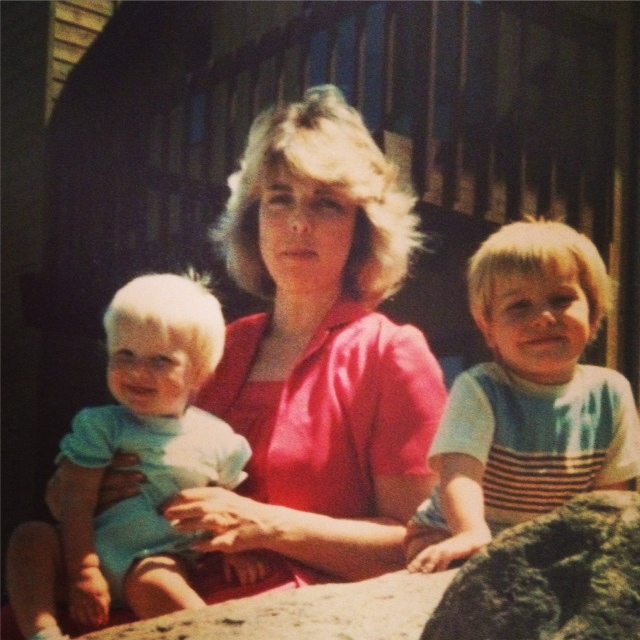
My dad was an NCAA referee for 20 years. We all loaded in the car and traveled to countless college basketball games, sometimes up late and sometimes eating *ahem* fast food for dinner. My mom didn’t stress about bedtimes or burgers — we were together.
Wherever he went, we went with.
As we grew older Dad stepped away from college games so he could ref and coach us instead. My brother and I played 7 sports between us through our high school years and my parents never missed a game.
They were with us.
My aim here is not to guilt y’all who can’t be with your kids every second. I get it. The last thing we need, as mamas, is a guilt trip about not being everywhere at all times.
But sometimes what we need isn’t to do more, it’s to do less, but with them. This can apply to every educational method and model, to every country and culture. 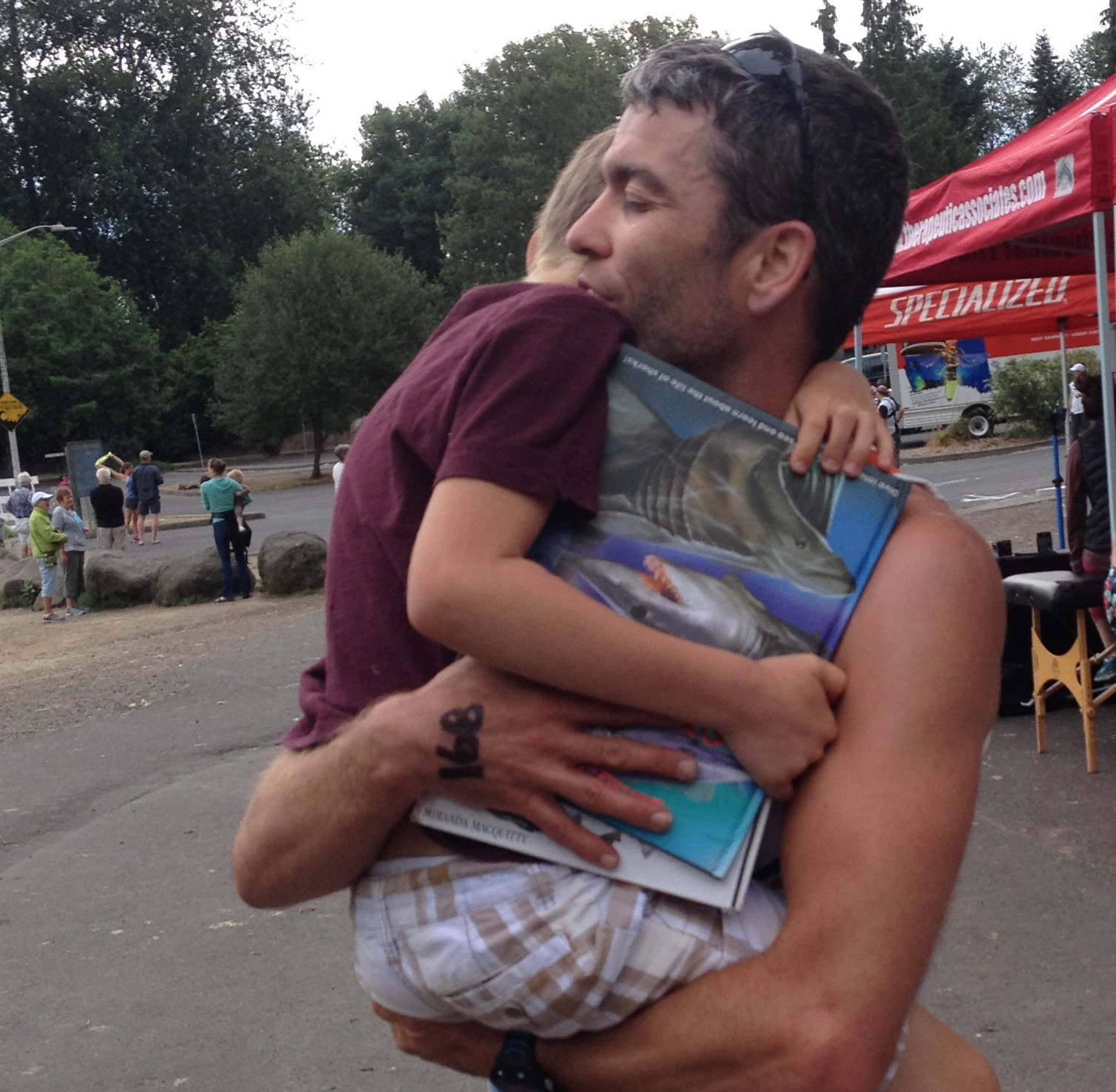
I see it this way: I get these kids for about 5 minutes, in the grand scheme of things. I’m going to blink and be 50 and they’ll be gone, flying on their own around this world. My time with them is so short. There are a thousand other things I could be doing, but this is one thing no one else can do.
No one else can Mama my kids.
No one else has the fierce love for them like me. No one else can know their hearts like me, can see that look in their eyes and know exactly what it means. No one else can show them the heart of God, can identify their love language, their motives and fears.
Last winter, I asked God to give me wisdom to help guide my Sacred Mundane with my kids. The word with came to my heart. Because I’m nerdy and like mnemonic devices, I turned it into an acrostic, to remind me every single day of how to be WITH my kids in intentional ways:
W: Work. How can I work with my kids, giving them skills and training them as we go?
I: Inspire. How can I inspire faith in my children today, teaching them to trust God more?
T: Teach. How can I teach my children the knowledge and wisdom they need to thrive in life?
H: Help. Where are my kids struggling? How can I help them to overcome an area of weakness today?
Isn’t this what Jesus does for us? His name is Immanuel: God with us. Jesus comes and lives among us, rubs shoulders with us, then promises that even after He leaves, He will be with us as we carry out His great commission (Matt. 28:18). He’ll never leave us or forsake us, He’ll be with us forever, even to the end of the age.
WITH is at the heart of the gospel, and I believe it’s at the heart of parenting too. This can look so different for every family–that’s the beauty of it! No one-size-fits-all. No template! No cookie-cutters!
You with your children and God with you.
{Bless you, faithful mamas and daddies, as you do life with your kids today. Thanks for reading.}

Because all it really is, is coming home.
Because that prodigal-son thing, I’ve done it a thousand times. Maybe more.
I’m tired. His way, always uphill, seems hard. I just don’t want it today. Sure, I still want His stuff. His blessings. His provision. All the goodies. So I demand all that, tight-fisted, but stomp off out of the house, in my heart.
I do my own thing.
I’m not off with prostitutes, but I’m certainly giving my affections to another. I’m not drunk with alcohol, but I turn to earthly comforts, pleasures …
fillers.
Fillers are those things–it doesn’t matter what–that we stick in spaces or meals or schedules, to fill out the emptiness. They have no real substance, we just need to fill some space so they’ll do.
That’s all the prodigal did — go seek fillers instead of The Filler.
And I do that too. I get tired of the Father’s House, under His eye, living bowed, submitted, surrendered. My own way just seems so much easier.
But the truth is, it’s hard.
Sure, it’s hard to live in the Father’s House. Carrying crosses and giving away life and embracing the upside down craziness of His upside down Kingdom.
But life outside the Father’s House is much, much harder.
So we must choose our hard. The hard way of the cross, or easier way of the world that’s infinitely harder in the end.
And so, like the prodigal, I come to my senses. He in a pigpen, tempted by the slop. I in my own pigsty, tempted by pale pleasures of self-pity, ego, indulgence.
His words become mine: “What am I doing?!”
He shakes his head, rises from the mud …
… returns home.
 Because that’s all that repentance really is.
It’s just coming home.
And as he shuffles home, reciting his “I blew it” speech, the Father sees Him from afar …
… and runs.
And I wonder when the prodigal stopped shuffling and started running. Because if my father is running to me, then why not run to Him? If He shows no hesitation in His embrace then why should I in mine?
Repentance has a bad rap. We picture self-flagellation. We picture the wagging finger. We picture shame. But the real picture should be:
Coming home.
That’s all. That’s all it is. When we repent for the first time and for the thousand times after. Because that prodigal-son thing, I’ve done it a thousand times. Maybe more. And that tweaked, messed-up view of repentance keeps me in the pigsty.
It keeps me from coming home.
So, from now on, the picture is firmly fixed in my mind. A thousand times I fail. His mercy remains. And when repentance is in order, I will refuse the self-flagellation, the wagging finger, and the shame. And I’ll just get up from the mud …
… and come home.
He runs to meet me.
{From one prodigal to another, as we pray all the other prodigals too. Thanks for reading.}
*Originally published Aug. 2013
Seeking sinners and waiting for sons
She disappeared. (They usually do.)
Jeff slid into bed late last night and said it quietly, “I can’t find Grace.” There was a tinge of concern in his voice. I was heavy with sleep, but perked up. Should we go looking?
We keep the chickens in their coop, but because Grace is beakless (read: defenseless) we keep her in the yard so the other chickens don’t peck at her. She’d always stayed in roughly the same spot … until now.
Again, chickens are like people, like sheep. We’ve had some in our house, too, who wouldn’t stay put. Sometimes they wander, get hurt, come back.
But then sometimes they disappear.
By far the hardest part of ministry, of loving people, whether in your home, your church, wherever, is that sometimes … they disappear. Without a word, they pull back, don’t show up, don’t respond … vanish.
It’s so hard to not get discouraged. And it’s hard too, to know how to respond. Jesus tells two stories about this, not just one. Meaning, there’s a decision to be made.

First He tells us a story about a lost sheep (Luke 15:3-7). Of course, Jesus says, you leave the 99 and go after the one that is lost, until you find it. The context is that Jesus is dining with sinners, not just preaching at them but hanging out with them. What?! The Pharisees and scribes were appalled and Jesus is appalled at them, hiding in their holy huddle without reaching out, into the broken dirty places of society. When these lost sheep are found (and repent) there is exceeding joy in heaven.
But then just a few breaths later He tells another story. This one’s about a prodigal son (Luke 15:11-32). This time, the son takes off, but nowhere does it say that the father goes after him. The father stays at home, waiting and watching for the day when his son will come to his senses and return. When the son does return, we find that glorious scene where the Father sees him when he’s “still a long way off” and runs to him and embraces him and kisses him. I can’t sing Josh Garrell’s song Coming Home at church without crying, because I’ve seen this–and done this–so often.
All repentance is, is coming home.
So when do we “go after” and when do we watch and wait? We could make some observations here, such as the context of the first story is seeking after sinners, and the context of the second story is watching and waiting for a son. The shepherd goes after the sheep because it’s lost. It cannot find its way home, there is no way you can expect it to. It is a clueless, aimless, lost sheep.
Lost people are lost sheep. We chase after baby goats who can’t get home.
But then, there’s the son. He knows the way home. He knows exactly how to find his street, his driveway … his dad.
But he wants to go his own way. Some call this the story of the “Lost Son” (in keeping with the chapter headings of Lost Sheep, Lost Coin, etc.) but I like Prodigal Son because this one’s different.
This kid knows what he’s doing.
And his father knows too. He knows he can’t force repentance. It won’t do any good to go drag his boy home, because his son has left in his heart. And while this isn’t in the parable, we can rest assured that the “going after” work done here is surely done in prayer.
Only God can bring hearts back home.
My intent here isn’t to give a definitive answer on when to chase after people and when to wait, but I know these passages have proven helpful for me as we’ve navigated when to seek sheep and when to wait, prayerful, and keep a watch out for whenever that child will come home.
And, as I sit typing these words, I look up, out the window, and there she was: Grace. Standing next to the bird bath, beakless, drinking on her own.
She’s home.
{Father, give us wisdom as we seek sinners and watchfully wait for sons. Have a blessed weekend, friends. Thanks for reading.}
Love in the Meantime
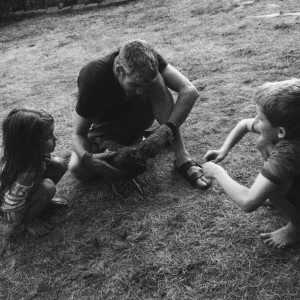
So now we’ve got a mangled, beakless, bottle-fed chicken on our hands.
Awesome.
I was glad Dutch prayed. Of course I was. I was amazed that Grace survived. Truly amazed. But her broken beak eventually fell off, and now we’re going on 24 days bottle-feeding this chicken.
Do you read me? 24 days bottle-feeding a chicken.
I Google it, hopeful: Do chicken beaks regenerate?
No. No they do not.
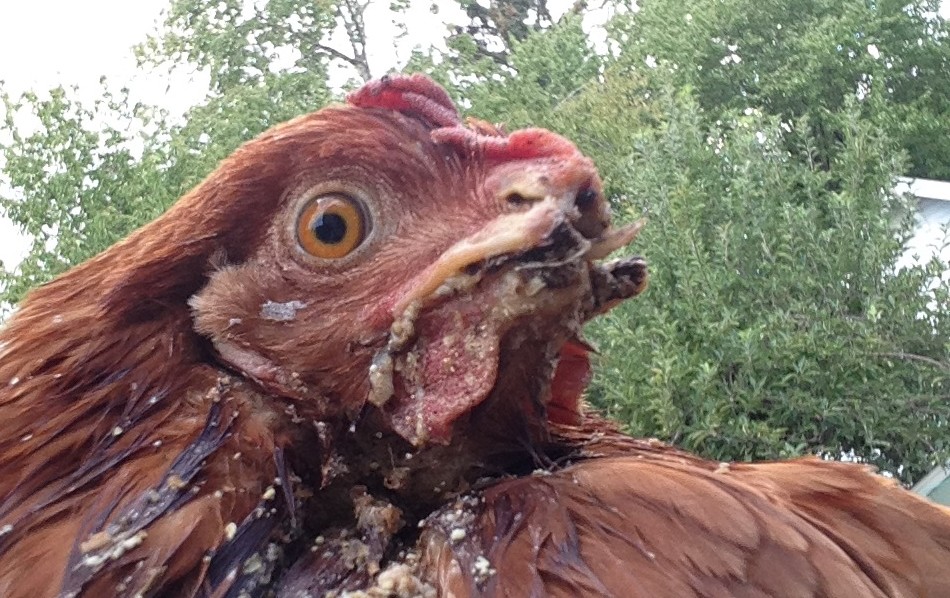
I start to panic. Are we going to be bottle-feeding this stupid precious chicken forever???
Again, you think I’m crazy. You think maybe the 24-days of bottle feeding the chicken has gone to my head and a few screws are loose. It’s possible. But I’ll tell you what, God knows I’m dense and I need illustrations to speak His Word to my heart and He asks me so clearly:
Will you love people even when they’re not getting better?
Will you love in the meantime?
The day that I fast and pray, my friend sends me this sermon that tears me in two, and the Father speaks so clearly to my heart that I find myself on my face, wrecked. He asks me: Will you love people even when they’re not getting better?
Will you love in the meantime?
Because oh I love to swoop in and love when there’s potential, right? When there’s hope for healing, for deliverance, for change. I can love when I see that breakthrough is just around the corner, when I have some reason to believe that maybe my little bit of love might be just enough to push them over the hump.
Is that loving people or loving seeing people change?
It’s subtle, I get it. There’s nothing wrong with loving to see people change. That’s transformation. That’s growth. That’s part of the gospel.
But the crazy thing is God loves us even when we’re (seemingly) stuck.
The day after one girl leaves my life another one pops up again. It takes twenty seconds to see that everything’s the same. Same hang-ups. Same habits. Some hurts.
Same. Same. Same.
The beak is broken off and it won’t regenerate. Ok?
Will you love her in the meantime?
Because I’ll tell you what, it’s great to see potential, but even better to see people, and sometimes when I’m loving people I find myself looking right over their shoulder, to what’s ahead, to what I hope for, to what I want for them.
But then I miss looking in their eyes.
I miss loving them right here. Where they are now.
And you know what happens when we do this? When I do this?
They sense the disappointment. Oh yes. It’s you again. And your beak is still broken, isn’t it? You’re not really any better are you? Ok then. And I begrudgingly grab the bottle, but my heart’s not there.
That night I flip open my most recent book on healing:
“While faith is a requisite for healing, both in the sick person and in the one praying for healing, the primary disposition needed by the minister of healing is love.”
The entire chapter, wouldn’t you know it, was on the healing power of embodying the love of God to those who are hurt, weak, sick … mangled.
If I have faith to move mountains but have not love …

Will you love in the meantime?
And so I take the bottle out back again to our beakless bird and smile at her while the goopy mush dribbles down her front. I pick up my phone and reach out to the unchanged one, and sit longer with the unhealed one, and let Him loose His love through me … in the meantime.
{Lord teach us to love in the meantime. Thanks for reading.}