

Gift-Giving Guide 2012

The kids were quiet in the backseat, worn out from a long day of playing, as we drove home from the Civil War party at Mom & Dad’s. The newspaper lay on the floor of the car, so pulled it up and flipped through its pages. One section caught my eye:
Gift-Giving Guide 2012
I was curious. Since I’m a goat-giver and believe a few chickens bring holiday cheer, I was interested what “the experts” would list as the best gifts of 2012.
It was exactly what I suspected. Lots of Uggs, gadgets, and dog-sweaters.
I said to Jeff, Surely there’s something better than this?
There is. It was waiting in my inbox when I got home.
My brother wrote an extensive Gift-Giving Guide for making wise, informed, and strategic charitable donations. Yes! This is exactly what I wanted. Basically, my brother is a genius at taking things I don’t understand (and don’t have time to research and try to understand) and breaking it down to understandable information I can assimilate and make (relatively) informed decisions.
So, I share with you, in parts, each Friday from now to Christmas:
Gift-Giving Guide 2012
Question: I know I am supposed to be generous to the poor, but there are a ton of different charities out there. What is the best place we can give our money?
This is a wonderful question to ask. In 1 Corinthians 13, Paul said, “If I give away all I have, and if I deliver up my body to be burned, but have not love, I gain nothing. ” The love Paul is talking about is “agape”, which is the love where we look for the best for others, as if it was our self. Paul is saying that if we give based on our own self-interest without making any effort to actually benefit someone with our giving (and certainly there are ways to give that can even harm others), then our giving has no gain. So I believe this question of where to give in order to bless others most , moves exactly in the direction that Paul is commending us toward with our giving.
Likewise, Hosea 6:6 says “For I desire mercy, not sacrifice”. Again, the goal of our giving isn’t our ourselves, and our own sacrifice, it is to bring benefit to others. This is a compelling statement on how we approach giving.
If all charities were equal in their impact, this question may not be that interesting. However, I believe that the difference between one charity and another can easily be 5, 10, or even 100 times the impact. This can be encouraging. Someone who has an income $50,000 and commits to giving away 10% to the poor, and makes an intelligent and wise selection of recipients by investing some time in research can easily have a bigger impact than a millionaire who gives away the same percentage of their income. We have incredible opportunity to make an impact, even if we aren’t super wealthy, when we make smart investments.
This giving guide is intended to provide an objective analysis of different types of charitable activities, then recommend types of charitable projects that benefit the poor the most per dollar given.
First, there are different goals we can pursue in our giving, based on our values. Here are several questions to ask, that will guide you to the best donation choice:
- Do you want your donation to result in an immediate benefit to someone, or would you prefer for it be an investment that may not do as much right now, but could reap much larger benefits years from now?
- Do you want to save a few lives, or improve the quality of life for a large number of people?
- If quality of life, what is most important: Having food, being healthy, having freedom, or something else?
- Do you want proven programs, or unproven (but potentially more beneficial) efforts?
- Do you want the donation to be directly from yourself, or use it to push others to give?
- Do you want to donate only to Christian organization, or any organization?
I pray these questions can be helpful to you as you consider how to bless others in Jesus’ name this season. Thanks so much for reading!
On wholeness, CS Lewis, and paint colors.
“There are three kinds of people in the world.
The first class is of those who live simply for their own sake and pleasure, regarding Man and Nature as so much raw material to be cut up into whatever shape may serve them.
In the second class are those who acknowledge some other claim upon them—the will of God, the categorical imperative, or the good of society—and honestly try to pursue their own interests no further than this claim will allow. They try to surrender to the higher claim as much as it demands, like men paying a tax, but hope, like other taxpayers, that what is left over will be enough for them to live on. Their life is divided, like a soldier’s or a schoolboy’s life, into time “on parade” and “off parade,” “in school” and “out of school.”
But the third class is of those who can say like St Paul that for them “to live is Christ.” These people have got rid of the tiresome business of adjusting the rival claims of Self and God by the simple expedient of rejecting the claims of Self altogether. The old egoistic will has been turned round, reconditioned, and made into a new thing. The will of Christ no longer limits theirs; it is theirs. All their time, in belonging to Him, belongs also to them, for they are His.
And because there are three classes, any merely twofold division of the world into good and bad is disastrous. It overlooks the fact that the members of the second class (to which most of us belong) are always and necessarily unhappy. The tax which moral conscience levies on our desires does not in fact leave us enough to live on …
The price of Christ is something, in a way, much easier than moral effort—it is to want Him. It is true that the wanting itself would be beyond our power but for one fact. The world is so built that, to help us desert our own satisfactions, they desert us. War and trouble and finally old age take from us one by one all those things that the natural Self hoped for at its setting out. Begging is our only wisdom, and want in the end makes it easier for us to be beggars. Even on those terms the Mercy will receive us.” (C.S. Lewis’s short essay, “Three Kinds of Men,” from his collection of essays, Present Concerns pp. 9-10.)
In other words — to throw ourselves at the feet of Jesus in reckless abandon is to find life, wholeness, peace. The divided life, the sacred-secular life, that of nurturing the self-life and the God-life alternately, brings only frustration, exhaustion, tension.
Peace is found in finding our whole life in Him.
What does this mean in real-time? For me, today, Can I be at the feet of Jesus, living in wholeness and reckless abandon and still be picking out paint colors for my new-old house? Yes. I believe so. But it is with a recognition that the task is infinitely less important and infinitely more important than we realize. It’s less important because really, It doesn’t matter. But more important because it is an opportunity to commune with my Savior and ask Him what might be most pleasing on His walls and what might make people feel warm, comfortable, and welcome? It is an opportunity to ask for His provision, His leading … and a super-duper sale on paint if He were so inclined.
Sacred Mundane. May you, may I, walk in wholeness today. Thanks for reading.
On darkness.
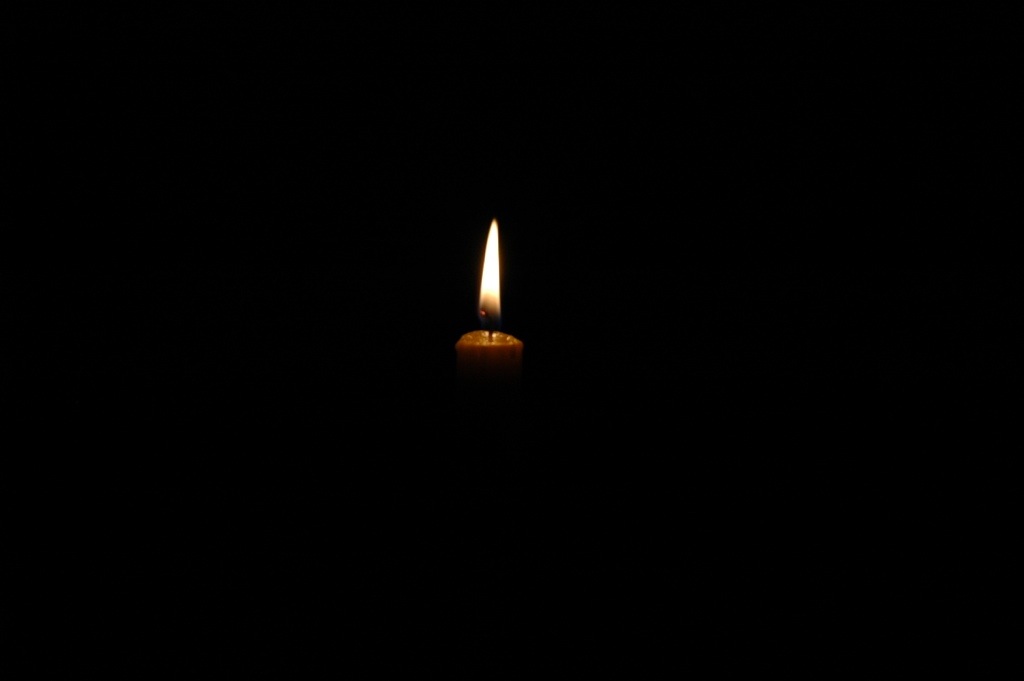
The people who walked in darkness have seen a great light; those who dwelt in a land of deep darkness, on them has light shined.
~Isaiah 9:2
Waiting.
None of us are very good at it, huh? I know I’m not. I know my kids are not.
Right now we’re at 23 days left. Not until Christmas, until a certain someone’s sixth birthday. Yes, it’s a big deal. No longer will the age fit on one hand.
He’s busting out into boyhood and both-handed age.
Along with the excitement of both-handed age, he’s anticipating a gift. A triple-floor Lego police station he’s been eyeing, drooling over, and praying for for quite a while. Thanks for generous grandparents the said station is already secured and hidden in a closet, waiting to be presented, but Dutch doesn’t know this.
He just knows his birthday’s coming and he is ridiculously loved by grandparents with ample resources: Good things are bound to happen.
This year–for the first time ever in 14 years of reading through the Bible each year–I’ve finished my Bible reading early. This means I have the entire Advent season–Nov 25th-Dec 25th–to slow, see, and savor the watching and waiting for Jesus. So this week I’ve just been meditating on Darkness.
When I think of seasons of my life that have been most dark, I think of seasons of waiting. Times of waiting, agonizing waiting, when nothing seemed to happen, when God was nowhere to be found. When I didn’t hear anything from Him, see ay of His movements, when I saw no answers to prayer. When it was just silent, still, darkness.
Israel experienced this for 400 years.
Between the Old Testament’s end and the New Testament’s beginning, 400 years of darkness elapsed.
Four-hundred years of darkness. Watching, waiting. Stillness, silence.
The entire earth held its breath.
Is it bad that my first thought is, “Oh I’m so glad I wasn’t born during that time!” It would be stinkin’ HARD to watch and wait for that long. To hear nothing. To see nothing. To just hold onto hope, trusting, trusting, trusting, trusting, year after year after year, your whole life. Generation after generation would pass along this hope, this waiting, waiting, waiting, hoping against all hope that the God of Israel had not forgotten them, but that He would do good on His promise and send Salvation.
They had no idea what this Salvation would look like, But they knew they were ridiculously loved by a God with ample resources: Good things were bound to happen.
In relation to this, my aching and waiting seems small. It is small. My waiting for a Publisher, my waiting for certain healing and transformation to take place in the lives of those I love. My waiting for answers to long-prayed prayers.
Sometimes it feels like weeks–months even–go by with nothing. Darkness. Stillness. Silence. And truth be told, I have no idea what my “answered” prayers may look like,
but I know I am ridiculously loved by a God with ample resources: Good things are bound to happen.
As we consider darkness, and watching and waiting for Christ, consider where else you are in”darkness” right now. Where else are you watching and waiting? Where else feels still, silent? Hoping for a baby? The return of a prodigal? The answer to that long-prayed prayer?
You are ridiculously loved by a God with ample resources: Good things are bound to happen.
~
{Just praying you know His love today. Watching and waiting, with you. Thanks for reading.}
Because sometimes, we just can't remember…

I had only been gone 5 minutes when it happened. Onions were simmering for soup. Christmas music floating through the house. Dutch intense over Legos. Heidi happily coloring. I ran down to discuss church business, ran back up to stir the onions again. I didn’t see Heidi.
Stirring the onions, I saw her come from around the corner, head down. She wrapped her arms around my leg.
“Hey, babygirl. What’s up?”
Head stayed down.
“Heidi, what’s up Sweetie?”
She finally looked up. Her eyes wide, stricken. I lowered down to look in her eyes.
“What’s wrong?” She turned and pointed, then took my hand and led me into the living room. Around the corner, she pointed.
A long line of pink marker down the wall.
“Oh.” I looked down into her wide eyes, her mouth started to twist, eyes filled, stricken by the pain of guilt. Tears spilled over her eyes. Oh I know that feeling, babygirl. That feeling of Oh, What have I done?
I scooped her up, ignoring the sizzle of onions behind me, and took her, crushed, crying, to her room. We slide down into the rocker. We rock. She grieves. I’ve been there:
Godly sorrow, it’s good–got to let it do its work.
This girl’s not yet 4 but has a spirit opening, like a flower, and I never want to miss an opportunity, thinking she’s too young.
“Heidi, does your heart feel sad and yucky inside when you do something naughty?”
“Yes,” she sobs.
“Me too. Mommy does naughty things too sometimes, and it makes my heart feel so sad and yucky. It’s a terrible feeling, I know. You know Mama does naughty things sometimes too, right?”
She nods. (A little too readily, if you ask me.)
“Do you know what those naughty things are called?”
She’s on it: “Sin.” She says it like she knows it, hates, it, hates the feeling of doing it. How early on we are acquainted with it!
“Can I tell you something wonderful?”
She nods.
“Do you remember why Jesus died on the cross?”
She’s recited it a hundred times: “To take away our sins!” but now, in the midst of her own sin, she can’t remember.
That happens to me too.
In the midst of my sin, I forget why Jesus died on the cross. I can’t see it. Don’t know it. Just can’t remember. Can’t think straight because the frustration and darkness of my selfishness eclipses the light of His love.
“Can I tell you again?”
She nods.
“Jesus came as a baby–at Christmas–and died on the cross, because He loves you so much He wanted to take away ALL your sin–even writing on the wall–and forgive you and take away all the sadness and yuckiness from your heart and make you all new and clean on the inside. Do you remember that?”
She nods.
“Mama forgives you, babygirl. I’m proud of you for showing Mommy your sin instead of hiding it. That’s the same as confessing. And now we’re going to pray and then go clean up the wall together.”
Now she’s stricken again. “But Mommy,” she sobs, “I tried to clean it up, I can’t. I tried with my finger and I can’t. See?” She shows me, pink ink smudged on the pad of her pointer finger. She looks down, now hopeless again.
I smile. “But this time, Mommy will help you. Do you believe Mommy can do it?”
A glimmer of hope: she nods.
After praying, we walk together to the living room, hand in hand. She shows me how she tried to get it off. How the pink just smudged and got bigger, worse.
Again, I ask: “Heidi, do you believe Mommy can do it?”
She nods.
I grab the spray cleaner and a little doggy-puppet wash cloth. She’s laughing as puppy makes silly voices and gets soaked with cleaner.
“Now, Heidi watch. Do you know what Jesus does with our sin? Watch carefully.”
Her eyes are wide. I spray the wall, and in one smooth action, wipe with doggy-puppet-washcloth and all trace of pink-pen … is gone.
Her face is light.
And I’m reminded, why Jesus died on the cross.
~
{Bless you, friends, as we begin the Advent season, watching and waiting for Christ. Thanks for reading.}